
Why Proper Rug Drying Matters After Cleaning
You want your freshly cleaned rug to come home ready to enjoy. Whether it is a family keepsake or the finishing touch in your living room, you want to know it has been cared for all the way through.
The wash is only part of that care. What happens afterward can affect how your rug looks, feels, and smells when it returns to your home.
For homeowners in Lakemoor, McHenry County, and Lake County, understanding the drying process can make choosing a rug cleaner easier. You do not need to know how to operate the equipment. You deserve to know why that equipment, and the person using it, matter.
A Clean Rug Needs to Be Dry Throughout
After washing and rinsing, moisture can remain within the pile, foundation yarns, and backing. A surface that feels dry does not necessarily tell you what is happening deeper inside a dense rug.
Proper drying addresses that remaining moisture before the rug is rolled, stored, or placed back in your home. It also needs to suit the rug's fibers, construction, dyes, and condition.
That is why professional rug care includes planning for drying before washing begins. A trained rug washer considers how to remove excess water, support the wet textile, and complete the drying process without creating unnecessary stress.
What Can Happen When a Rug Is Not Dried Properly?
The risks depend on the rug and the conditions. A damp rug will not automatically develop every problem below, but prolonged or uneven drying can create avoidable difficulties.
Mold growth. Yes, mold can grow on a rug that stays damp when conditions allow it. Moisture is essential to mold growth, which is why prompt, thorough drying matters. The EPA's guidance on mold and moisture emphasizes drying wet materials quickly and controlling moisture. Mold is a risk to prevent, not an inevitable result of washing a rug.
Musty odors. A rug left wet for too long can develop a stale or musty smell associated with microbial activity. An odor deserves attention, although smell alone cannot establish whether mold is present.
Discoloration. Moisture moving through a drying rug can carry residual soil toward the surface or fringe, leaving visible discoloration. Susceptible dyes may also migrate. Drying conditions matter, but dye stability and the cleaning process contribute to the risk too.
Rippling or an altered feel. Uneven contraction during drying can leave some rugs distorted or rippled. Depending on the materials and construction, slow drying may also leave a rug feeling unusually stiff. These are among the concerns described in WoolSafe's discussion of rug drying.
These possibilities explain why drying deserves the same attention as washing. They do not mean that an existing ripple, odor, or color change necessarily came from improper drying.
Will Proper Drying Remove Every Odor?
Proper drying helps prevent problems caused by lingering dampness. It does not replace removing the source of an odor.
For example, pet urine contamination can remain within a rug unless it receives appropriate treatment and flushing. Simply making that rug dry will not necessarily eliminate the smell. The Cleaning Studio addresses qualifying urine odor problems through a separate treatment process described on our rug cleaning services page.
If you notice an odor before cleaning, tell your rug specialist where it is strongest and what may have caused it. That information helps guide the assessment. A rug that still smells musty after drying should be checked rather than covered with fragrance or immediately rolled up for storage.
Why Humidity Control and Airflow Matter
Drying requires moisture to leave the rug and move into the surrounding environment. If that environment remains humid, evaporation becomes less effective. Air movement helps carry moisture away from the rug's surface, while managing humidity helps the process continue.
A professional drying setup brings several factors together:
- Water removal: Suitable extraction reduces the amount of water left to evaporate.
- Air circulation: Directed airflow helps move moisture away from the textile.
- Humidity management: Dehumidification or controlled air exchange manages the moisture released into the drying space.
- Appropriate conditions: Temperature, placement, and drying time need to suit the rug.
The EPA describes the complementary roles of fans and dehumidification in drying carpet and backing. Having a fan nearby is only one part of managing a wet textile.
In a Northern Illinois home, a spare room or garage may not provide those conditions consistently. Leaving a rug there until the surface feels dry can give you an incomplete picture of its readiness.
How The Cleaning Studio Handles Drying
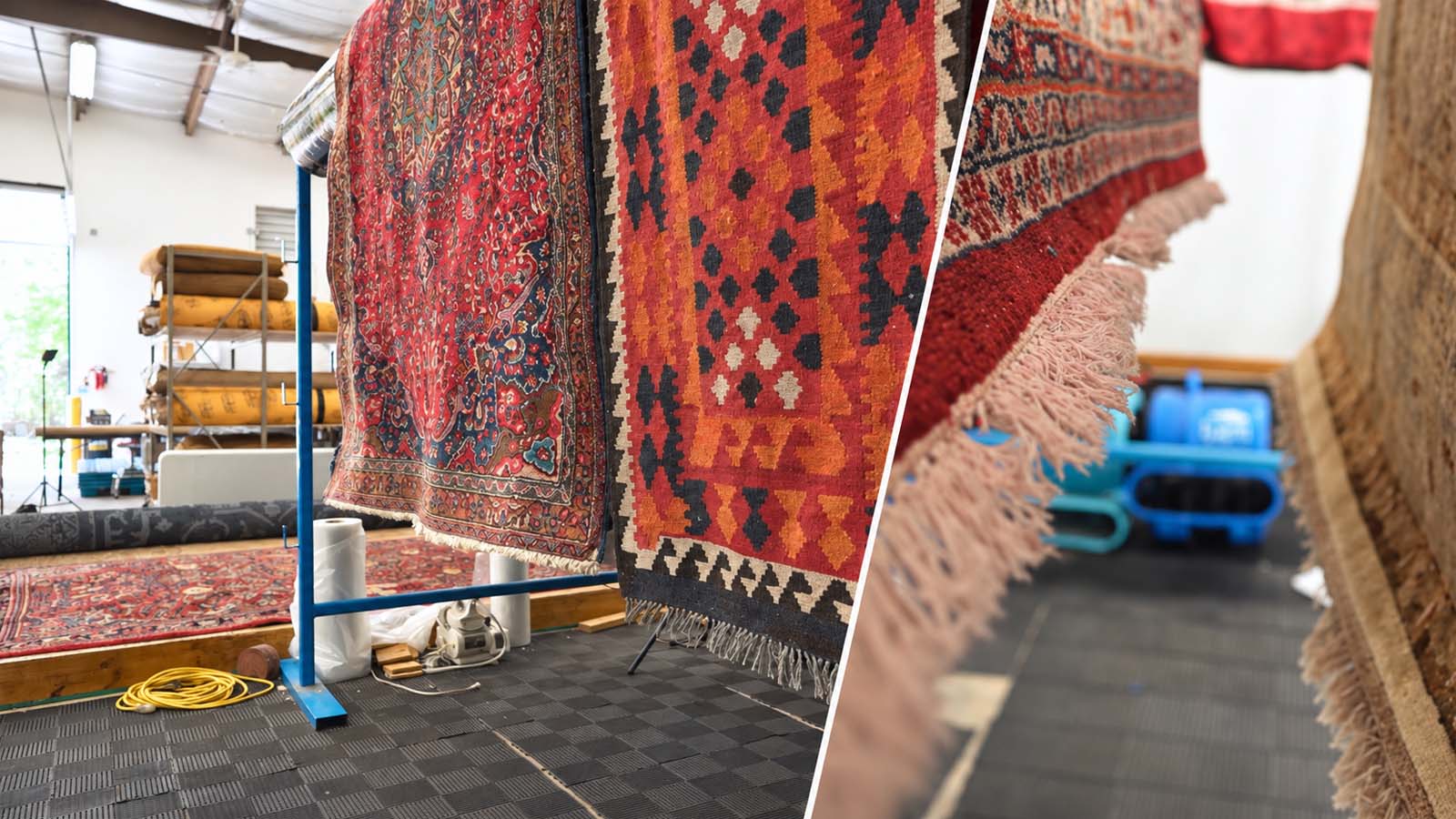
At The Cleaning Studio, we rinse rugs after cleaning and place them in our humidity-controlled drying space until completely dry, followed by final fringe and pile grooming. Drying is a defined part of our individualized rug cleaning process.
Our drying racks and air-moving equipment help support this stage of care. The photographs show rugs suspended on racks, with space around the hanging textiles and air movers in the work area.
Hanging is one drying method, but it is not right for every rug. A specialist considers whether the rug can be supported that way and whether moisture movement could affect vulnerable dyes or fringe. Some rugs need a different position or method. The equipment is useful because a knowledgeable person selects how to use it.
For you, that means having someone assess these details instead of trying to judge a wet rug's needs on your own.
Experienced Help for the Rugs You Value
It is understandable to hesitate before entrusting someone with a rug that matters to you. The Cleaning Studio is owned by the Meintz family and has cared for rugs in Northern Illinois and Southern Wisconsin since 2005. David Meintz is an IICRC Certified Master Textile Cleaner and a WoolSafe Fiber Care Specialist. Learn more about our team.
You can take a simple path toward getting your rug back into your home with confidence:
- Tell us about your rug. Share concerns about odors, stains, prior cleaning, or areas that have stayed damp.
- Let us assess the care it needs. We inspect the rug and choose an appropriate cleaning approach, including the drying stage.
- Enjoy your rug again. Complete drying and finishing prepare it for its return to your home.
Ready to arrange professional rug care? Call 815-893-8155 or contact The Cleaning Studio to request an estimate. Ask about pickup availability for your address in McHenry County or Lake County, or drop-off at 108 South Sheridan Road in Lakemoor.
Your part is choosing care that fits the rug you love. Our part is helping you understand and manage the details, from the first inspection through drying and finishing.