

Why Your Rug Might Not Be Perfectly Straight
The Hidden Artistry Behind Hand-Knotted Rugs
Have you ever looked at your rug and noticed that one side seems slightly wider than the other? Maybe the edges do not line up perfectly, the corners seem a little uneven, or the rug has a subtle curve when it is placed on the floor.
At first, it can make you wonder if something is wrong.
In many cases, there is no need to panic. With handmade and hand-knotted rugs, slight irregularities in shape are very common. These rugs are not made by machines. They are created by hand, one knot at a time, which means small variations are often part of their character.
For homeowners in McHenry, Northern Illinois, and Southern Wisconsin, understanding these natural characteristics can help you know when your rug is showing normal handmade charm and when it may need a professional look.
Handmade Rugs Are Not Machine-Made
A machine-made rug is designed to be uniform. The edges are usually straight, the shape is predictable, and the pattern is repeated with mechanical precision. A hand-knotted rug is different.
Every hand-knotted rug begins on a loom with vertical foundation threads called warps. These threads run the length of the rug and often become the fringe at each end. Horizontal threads, called wefts, are woven through the rug to help hold the rows of knots in place.
As the rug is woven, the weaver controls the tension by hand. If that tension changes slightly from one side to the other, the rug can develop a subtle bow, curve, or uneven shape. One side may pull tighter. One end may finish a little wider. A runner may appear to lean slightly when placed against a straight hallway wall or hardwood floor line.
That does not necessarily mean the rug is defective. It often means the rug was made by a real person using traditional methods.
Why Some Rugs Bow, Ripple, or Look Uneven
Several factors can affect the shape of a handmade rug. Uneven tension during weaving is one of the most common reasons. If the foundation threads are pulled tighter on one side of the loom, the shape of the rug can slowly shift as the weaving continues. By the time the rug is finished, it may not be a perfect rectangle.
The materials used in the rug can also make a difference. Wool, cotton, silk, and other natural fibers respond differently to tension, moisture, cleaning, and humidity. A rug with a wool pile and cotton foundation may react differently across different areas, especially over time.
Age and use can also play a role. A rug that has been walked on for years, rolled in storage, exposed to moisture, placed on an uneven floor, or held down by heavy furniture may develop waves, ripples, or changes in shape.
Sometimes these changes are minor. Other times, they can be a sign that the rug needs attention.
When Should You Be Concerned?
A slightly uneven shape is very common in hand-knotted rugs. In larger room-sized rugs, the variation may barely be noticeable once the rug is placed with furniture. In smaller rugs and runners, the unevenness can stand out more because the edges are easier to compare against walls, tile lines, or hardwood planks.
You may want to have your rug evaluated if:
- The rug suddenly developed ripples or waves.
- The rug no longer lies flat.
- One edge is curling and creating a tripping hazard.
- The rug was recently exposed to water or high humidity.
- The rug has pet urine damage, foundation weakness, or visible structural issues.
- The rug looks distorted after being stored, folded, or cleaned improperly.
At The Cleaning Studio, we inspect rugs carefully before cleaning so we can understand the rug’s construction, fibers, dyes, stains, soils, pet issues, and overall condition. That inspection helps us choose the safest cleaning process and identify any concerns before work begins.
Can a Crooked Rug Be Straightened?
Sometimes, yes.
A process called blocking may help improve the shape of certain rugs. Blocking involves carefully stretching and positioning the rug to encourage it to return closer to its intended shape. This can sometimes reduce bowing, curling, or uneven edges. However, blocking has limits.
Some rugs will never become perfectly straight, especially if the uneven shape was created during the original weaving process. Cleaning, humidity, regular use, and the rug’s foundation can also affect whether the improvement holds over time.
The goal is not to force a handmade rug into looking machine-made. The goal is to protect the rug, improve its appearance when possible, and avoid causing damage.
A Quality Rug Pad Can Help
A good rug pad will not completely reshape a rug, but it can help your rug lie better, feel better underfoot, and stay more stable on the floor.
The right pad can reduce slipping, soften foot traffic, add cushioning, and help protect the rug from unnecessary wear. For rugs placed on hardwood, tile, or luxury vinyl floors, a properly fitted rug pad can also reduce movement that may make uneven edges more noticeable.
At The Cleaning Studio, we offer custom-fit rug pads to help protect your rug and improve how it performs in your home.
Celebrate the Character, Protect the Investment
A handmade rug is more than a floor covering. It is a piece of craftsmanship, culture, and personal history. The slight curve in the edge, the small variation in width, or the subtle irregularity in the pattern may be part of what makes it special. But special rugs still need proper care.
If your rug is not lying flat, seems uneven, has ripples, or you are concerned about its condition, we can help you understand what is normal and what may need attention. At The Cleaning Studio in McHenry, Illinois, we provide professional rug care for homeowners throughout Northern Illinois and Southern Wisconsin.
We Can Help
If you are concerned about the shape, condition, or long-term care of your rug, contact The Cleaning Studio. Whether your rug needs cleaning, repair, stain protection, a custom rug pad, or a professional inspection, we can help you choose the safest next step.
Your rug does not have to be perfect to be valuable. It deserves care that respects how it was made.
Frequently Asked Questions About Rugs That Are Not Perfectly Straight
Is it normal for a handmade rug to be slightly crooked?
Yes. Many handmade and hand-knotted rugs have slight variations in shape. Because they are woven by hand, small differences in tension, materials, and construction can cause the rug to bow, curve, or appear uneven.
Does an uneven shape mean my rug is damaged?
Not necessarily. A rug can be slightly uneven and still be structurally sound. However, if the rug suddenly changes shape, develops ripples, curls at the edges, or becomes a tripping hazard, it should be inspected.
Can cleaning make a rug change shape?
Cleaning can sometimes reveal shape issues that were already present. Moisture, fiber type, foundation material, drying, and humidity can all affect how a rug responds. That is why we inspect rugs before cleaning and choose a method based on the rug’s construction and condition.
Can The Cleaning Studio make my rug perfectly straight?
Sometimes a rug can be improved through blocking or other professional techniques, but not every handmade rug can or should be forced into a perfect rectangle. The best option is to have the rug inspected so we can make the safest recommendation.
Should I try to stretch or flatten the rug myself?
It is better not to pull, stretch, soak, or force the rug flat on your own. Handmade rugs can be delicate, and aggressive handling can damage the foundation, fringe, edges, or dyes. A professional inspection is the safer first step.
Read more articles from our rug blog
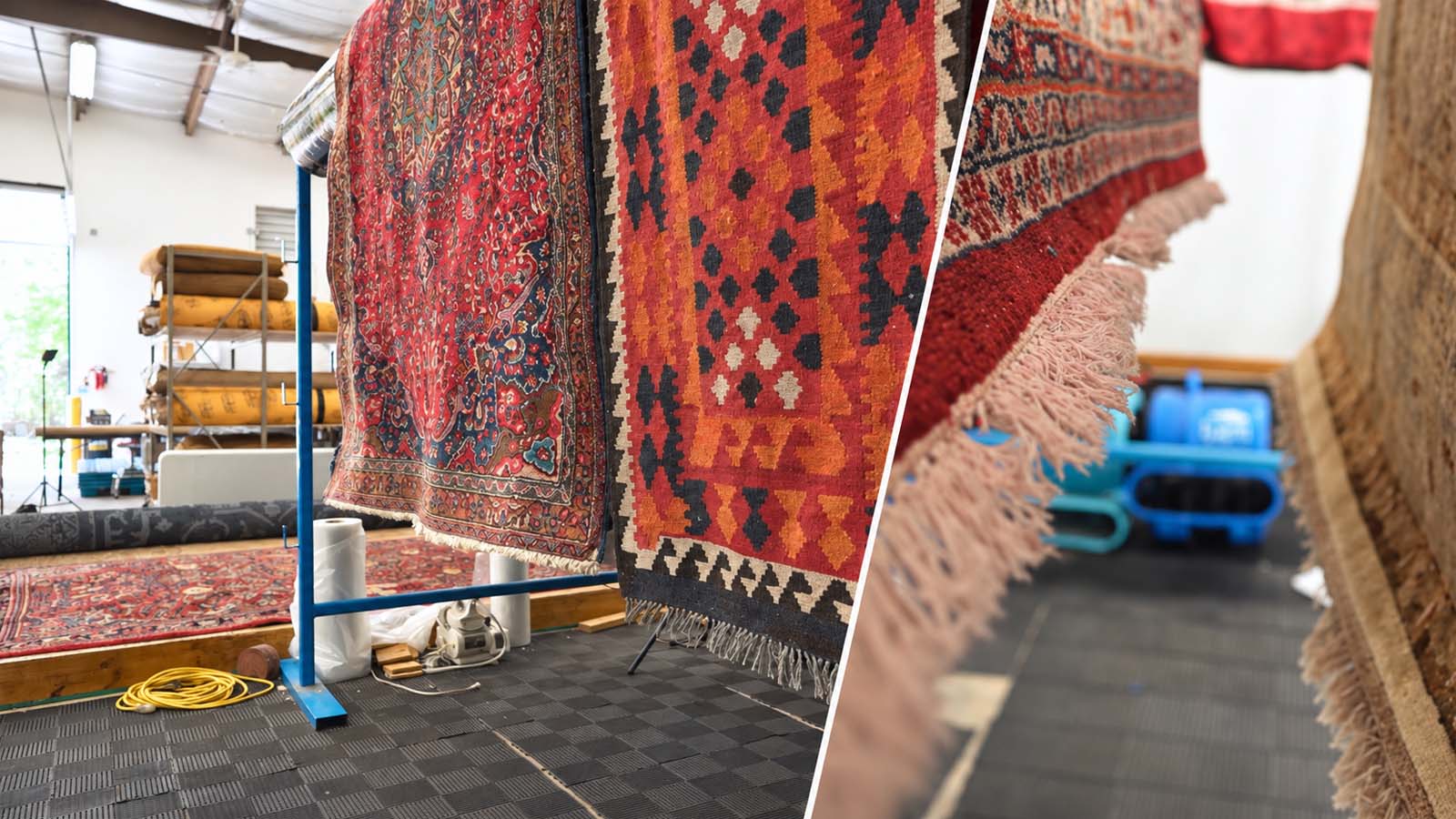
Why Proper Rug Drying Matters After Cleaning

Why Rugs Need Dusting Before Cleaning and Why Vacuuming Isn’t Always Enough

Is Your Rug Pad Wearing Out? Here’s How to Tell

Why Rug Fringe Gets Dirty, Worn or Damaged First

Distressed Rugs: Why Some Rugs Are Made to Look Worn

Rug Shedding and Pilling: What Northern Illinois Homeowners Should Know

Why Your Area Rug May Look Different After Cleaning

What Is Abrash in an Oriental Rug, and Should McHenry Homeowners Be Concerned?

Those White Specks in Your Rug May Not Be Damage
